
Shared Data for Process, Decision and Case Management
SDMN - The new upcoming standard by the Object Management Group

As most industries and governmental organisations embrace digital transformation and strive for operational excellence, the need for streamlined processes, efficient decision-making, and cohesive case management becomes increasingly apparent.

In order to achieve the goals and objectives linked with operational excellence ever more organisations have started using business modeling and simulation techniques to analyse, document, implement and automate:
case management - for organising their customer service and the lifecycles of their customer relations and contract management;
process management - for streamlining the work they are performing for both external and internal customers;
decision management - for supporting fast, accurate and compliant decision-taking about service eligibility, customer request acceptance and product/service delivery.
Three management aspects that need to be assumed in a harmonised and well-structured manner to lead to desired and sustainable results. Three business modeling and automation challenges in need for coherent and powerful standards.
Exactly what the Object Management Group (OMG) successfully delivered as a group of standards, called BPM+:
CMMN (Case Management Model and Notation);
BPMN (Business Process Model and Notation);
DMN (Decision Model and Notation).
But, until SDMN appeared on the horizon, with one shortcoming: the 3 standards all included a way to define data items or data elements, but within BPM+ there wasn’t a robust way to harmonise these, nor to manage them.
And that is what the new standard SDMN, which stands for “Shared Data Model and Notation” is adding to the world of BPM+ business modeling.
Understanding SDMN: A Unified Data Approach for Business Modeling
At its core, SDMN embodies a library of data elements meticulously crafted to support a set of BPM+ Models. These models, which encompass Business Process Model and Notation (BPMN), Case Management Model and Notation (CMMN), and Decision Model and Notation (DMN), provide a comprehensive framework for addressing various business challenges.
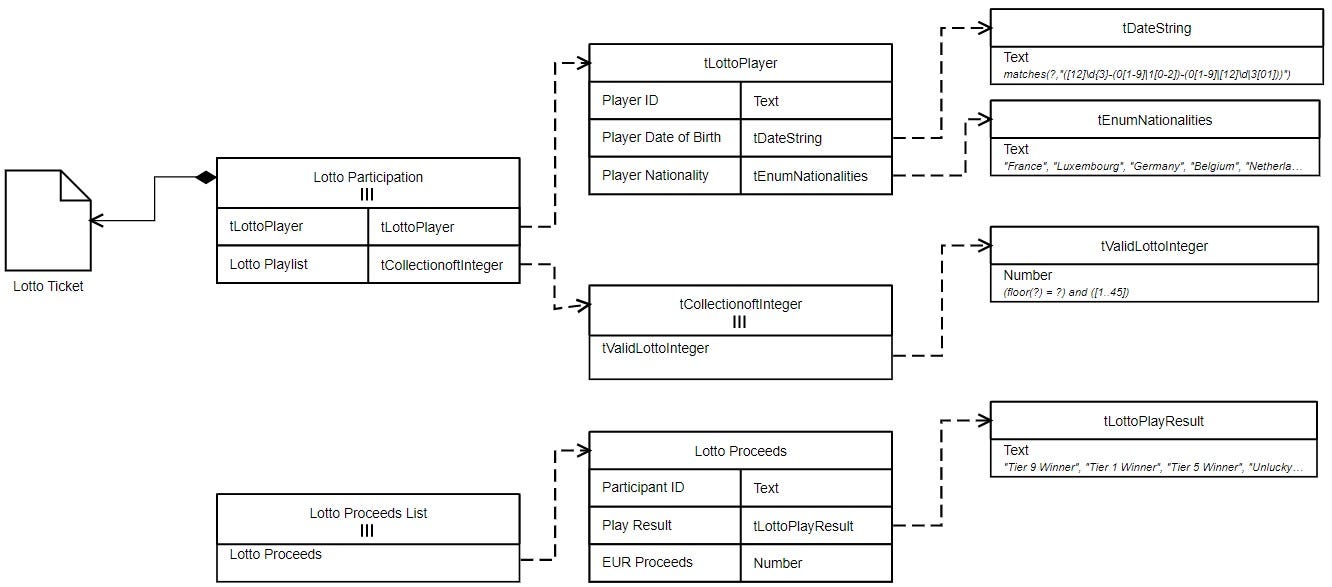
By consolidating essential data elements across correlated BPM+ models, SDMN offers a shared, scoped, and focused view. This unified perspective facilitates seamless interaction between models and external data sources, fostering agility and coherence within the organisational ecosystem.
The Fourth Pillar of BPM+: Enhancing Business Intelligence
In the realm of BPM+, SDMN emerges as the fourth pillar, alongside Process, Case, and Decision models. It not only complements existing standards but also extends the capabilities of the BPM+ stack. As businesses navigate complex operational landscapes, SDMN serves as a cornerstone for building robust knowledge packages.
Consider a scenario where multiple BPM+ models converge to address a critical business domain, such as healthcare clinical guidelines. In such instances, numerous individual Process, Case, and Decision models may come into play. Here, SDMN plays a pivotal role in ensuring consistency and accuracy across these models by synchronising shared data elements.
Driving Efficiency Through Centralised Data Management
One of the key drivers behind the adoption of SDMN is the need for centralised data management. As organisations embark on the development of extensive BPM+ models, maintaining consistency in data structures becomes a daunting challenge. SDMN alleviates this burden by providing a central data library, serving as a single source of truth for shared data elements.
Moreover, as BPM+ models evolve over time, the flexibility of SDMN enables seamless synchronisation of changes across multiple models. This not only streamlines maintenance efforts but also enhances agility in adapting to evolving business requirements.
A Unified Modeling Environment: Simplifying the Modeling Experience
In addition to its data management capabilities, SDMN offers a unified modeling environment consistent with existing BPM+ modeling tools. This ensures a smooth transition for modelers across different platforms, enhancing productivity and collaboration.
Furthermore, SDMN leverages Specification Core Elements (SCE) to provide a common set of modeling language elements. By building upon these foundational structures, SDMN, along with other BPM+ standards, lays the groundwork for standardised modeling practices, driving efficiency and interoperability.
Embracing the Future of Business Modeling
As financial, governmental and other institutions navigate the complexities of the modern business landscape, embracing innovative standards like SDMN is imperative. By unlocking the power of shared data elements, organisations can streamline processes, enhance decision-making, and drive operational excellence.
In conclusion, SDMN represents more than just a standard—it's a catalyst for transformation, empowering businesses to unlock their full potential in the digital age. For organisations aiming to be successful and sustainable in their jouirney to operational excellence, embracing SDMN is not just an option—it's a strategic imperative.